It's another review! This time I went to see an honest-to-God standup show in a pub, which definitely ranks pretty high on my list of awesome ways to spend an evening. To make it even better the three standups were all massive nerds, as were the audience. But more on that in a minute. Incidentally, if you click on the title of this entry, and you should, it'll take you to their website.
The show inspired me to design a T-shirt, seen in my previous blog post, or here if you're really lazy. Please do leave a comment and let me know what you think. And comment on the review too, because you're a wonderful person and your opinion is really important to me :)
Buttered up yet? Good, let's get cracking!
For those of you who love to spend your evenings discussing scientific theory over a pint down the pub (come on, you know you're out there), Festival of the Spoken Nerd will be familiar territory. Run by three comedians with impressive nerd credentials, the pi-themed show, subtitled "Pi-curious", managed to present some serious mathematics in a way that was simple and understandable, even for those without any dedicated scientific training.
The evening took the form of a series of skits by the three scientists/comedians Matt Parker, Helen Arney and Steve Mould, and opened with "stand-up mathematician" Parker's attempt at setting the unofficial world record for solving a Rubik's cube while reciting world records for solving the Rubik's cube. What seems from description to be a rather dry premise was transformed on stage by Parker's excellent delivery and impressive multitasking into something truly hilarious.
Following Parker was Helen Arney, introduced as "Britain's foremost musical female physicist", with a love song written to woo that mathematician in your life. If pun-based humour is your thing, Arney and her electric ukulele have it covered, and she returned to the stage later on in the show with an audience-participation piece aimed at illustrating some of the more staggering numbers one encounters in the maths world.
Physicist Steve Mould leads a double life as the science expert for Blue Peter, and was introduced on stage as "the man who makes the technology work", just as the projection screen flashed up the infamous "blue screen of death", which anyone who was using a Windows PC a few years ago will be all too familiar with. Mould's segments of the show included "here's one I made earlier" models of solids of constant width, which defy description but are definitely worth looking up online, and he later teamed up with Parker for a comedic debate about which scientific constant was better, pi or tau.
Between them, the three kept the sell-out crowd entertained for the better part of two hours, even dragging several members of the audience up on stage to help explain the maths behind Russian Roulette, which they played with a plate of marshmallows and that stuff your parents use to stop you biting your nails. The result when Mould finally picked the loaded marshmallow was well worth waiting for!
All in all, Festival of the Spoken Nerd was an evening very well spent. It was refreshing to see a science-themed show which trusted its audience to "get it" and didn't fall into the usual trap of being overly patronising. With regular shows in London, and the promise of a return to Brighton for the comedy festival in October, there will be plenty of chances to see them in action this year and I cannot recommend them enough.
Showing posts with label comedy. Show all posts
Showing posts with label comedy. Show all posts
Monday, 20 February 2012


I designed a T-shirt!
Last night I went to see a very funny scientific stand-up show (yes, that's a thing) called Festival of the Spoken Nerd. I was there to write my second review from the Brighton Science Festival (coming soon to a blog... well, here), and while I was there I was inspired to design this T-shirt. So here it is:
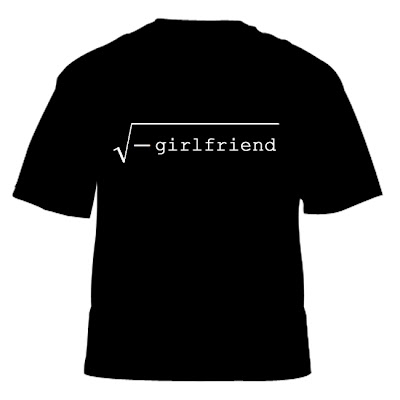 Please leave your thoughts in the comments, but only as long as they're nice :)
 Please leave your thoughts in the comments, but only as long as they're nice :)
Wednesday, 15 February 2012
Marcus Brigstocke: God Collar, Sallis Benney Theatre, Brighton, February 10
I've been asked by the Badger (Sussex Uni's student newspaper) to write a few reviews on events during the Brighton Science Festival. I've never written a review of anything before (aside from maybe sticking a few pithy lines about some film I've seen into a blog post), so please bear with me if I completely fuck it up. Hopefully the next few will be better. Let's crack on...
If you're anything like me, you see the words "[comedian] explores religion" and expect an evening of Bible-bashing, picking out the most insane beliefs of global religions for us all to have a good laugh at and feel smugly superior in our lack of faith. How wrong I was. God Collar, written following a long period of depression and introspection following the death of Brigstocke's best friend, is an honest exploration of faith, our need for it, and what it offers us in times of crisis.
Brigstocke deliberately focuses on the Abrahamic faiths (Christianity, Judaism and Islam) as they are the ones to which his audience, and Brigstocke himself, can most easily relate. With the curator of the Brighton Science Festival, Dr Richard Robinson, providing a sounding board and occasional prompt, Brigstocke invites his audience to join him on his exploration of faith, challenging our preconceptions both of faith and of atheism. Neither are safe from Brigstocke's unique brand of dry wit, and he firmly believes that neither should be, pointing out that fervent atheism of the kind displayed by Richard Dawkins and his contemporaries requires just as much faith in an idea as any religious belief.
The show is funny, but also thought-provoking and at times quite poignant. Brigstocke shares himself completely with his audience, drawing them in and inviting them to rethink their views on faith and what they really believe. He is keen to point out to an audience of mostly scientific minds that atheism by no means proves you are smarter than anyone else. Indeed, he makes a point of saying that some of the most stupid and vacuous people he knows are atheists.
If he makes one point to take home though, it is that faith, in whatever form, can be an immense comfort in times of crisis and should not be dismissed lightly. Even if you do not believe in the Abrahamic God (and he sees little enough reason to), it can be enough just to believe in something, and the most important thing is to keep an open mind.
If you're anything like me, you see the words "[comedian] explores religion" and expect an evening of Bible-bashing, picking out the most insane beliefs of global religions for us all to have a good laugh at and feel smugly superior in our lack of faith. How wrong I was. God Collar, written following a long period of depression and introspection following the death of Brigstocke's best friend, is an honest exploration of faith, our need for it, and what it offers us in times of crisis.
Brigstocke deliberately focuses on the Abrahamic faiths (Christianity, Judaism and Islam) as they are the ones to which his audience, and Brigstocke himself, can most easily relate. With the curator of the Brighton Science Festival, Dr Richard Robinson, providing a sounding board and occasional prompt, Brigstocke invites his audience to join him on his exploration of faith, challenging our preconceptions both of faith and of atheism. Neither are safe from Brigstocke's unique brand of dry wit, and he firmly believes that neither should be, pointing out that fervent atheism of the kind displayed by Richard Dawkins and his contemporaries requires just as much faith in an idea as any religious belief.
The show is funny, but also thought-provoking and at times quite poignant. Brigstocke shares himself completely with his audience, drawing them in and inviting them to rethink their views on faith and what they really believe. He is keen to point out to an audience of mostly scientific minds that atheism by no means proves you are smarter than anyone else. Indeed, he makes a point of saying that some of the most stupid and vacuous people he knows are atheists.
If he makes one point to take home though, it is that faith, in whatever form, can be an immense comfort in times of crisis and should not be dismissed lightly. Even if you do not believe in the Abrahamic God (and he sees little enough reason to), it can be enough just to believe in something, and the most important thing is to keep an open mind.
Subscribe to:
Posts (Atom)